We use cookies to help you navigate efficiently and perform certain functions. You will find detailed information about all cookies under each consent category below.
The cookies that are categorised as "Necessary" are stored on your browser as they are essential for enabling the basic functionalities of the site....
For more information on how Google's third-party cookies operate and handle your data, see: Google Privacy Policy
Necessary cookies are required to enable the basic features of this site, such as providing secure log-in or adjusting your consent preferences. These cookies do not store any personally identifiable data.
Functional cookies help perform certain functionalities like sharing the content of the website on social media platforms, collecting feedback, and other third-party features.
Analytical cookies are used to understand how visitors interact with the website. These cookies help provide information on metrics such as the number of visitors, bounce rate, traffic source, etc.
Performance cookies are used to understand and analyse the key performance indexes of the website which helps in delivering a better user experience for the visitors.
Advertisement cookies are used to provide visitors with customised advertisements based on the pages you visited previously and to analyse the effectiveness of the ad campaigns.
Other uncategorised cookies are those that are being analysed and have not been classified into a category as yet.
Selecting the ideal gearmotor for diverse applications requires you to consider factors like size constraints, precision, cost-effectiveness, torque, and speed. In this article, we will delve into the distinctions between miniature DC gearmotors and stepper gear motors.
A gearbox serves as a mechanical system for transmitting power to a shaft, adjusting it as needed. Within the gearbox reside an array of gears responsible for reducing the rotational speed of the input shaft (the transmission shaft) while simultaneously amplifying the torque. Miniature DC gearmotors and stepper gear motors each find their own unique applications. In this article, we shall outline the two categories of gearmotors and the reasons to choose each.
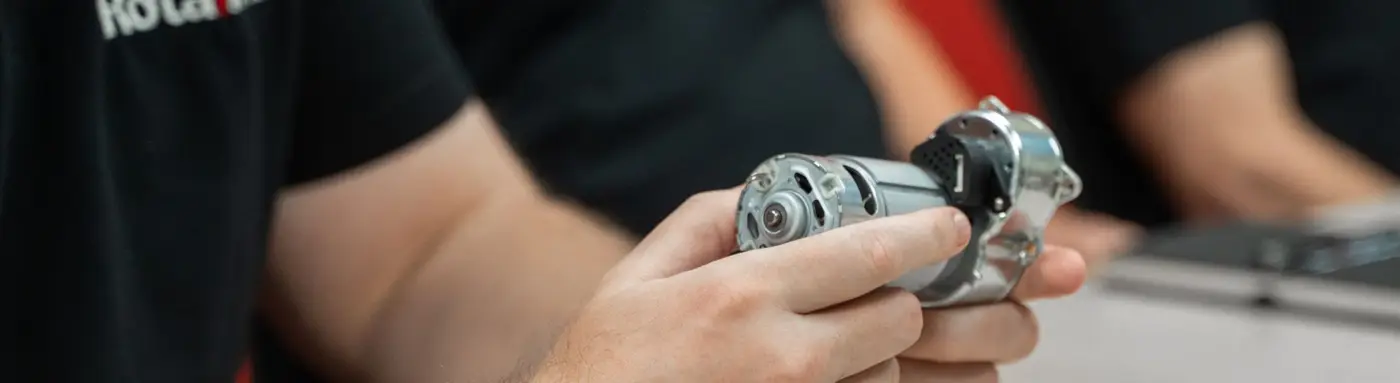
Miniature DC gearmotors are devices capable of converting electrical energy into mechanical energy, relying on direct current as their power source. They possess the ability to decrease the motor-generated speed and proportionally enhance torque. For instance, by halving the rotation speed, the torque roughly doubles. The miniature DC gearmotor’s speed can be adjusted by varying the input supply voltage.
This combination of motor and gearbox proves highly effective, allowing even small devices like dough mixers or miniature drills to generate substantial power despite their compact size. The energy produced gets transferred to the opposite end of a shaft, converting it into a low-speed driving torque.
The far-reaching industrial applications of gearboxes span diverse machinery demanding precise torque and speed control. However, the efficacy of these applications hinges upon selecting the appropriate gearbox variant. An ill-suited gearbox can lead to compromised functionality and subpar operational efficiency, thereby underscoring the importance of a well-matched solution.
Stepper motors, on the other hand, are synchronous electric motors that maintain a constant rotation speed and position without relying on feedback transducers such as encoders or tachymetric dynamos. Unlike other motor types, like the widespread DC motor, a stepper motor does not alter its rotation speed based on the load; it keeps it constant. When a gearbox is applied to a stepper motor, the output torque multiplies.
Given the diversity of gear motors available, it’s essential to grasp their differences, especially in the context of small geared motors, to make informed choices. A micro gear motor combines a micro reducer and an electric motor. With this gearbox setup, the gear motor finds utility in low-speed, high-torque applications, and the choice between miniature DC gearmotors and stepper gear motors depends on the specific motor used.
The choice between a miniature DC gearmotor and a stepper gear motor also depends on the intended application:
Miniature DC Gearmotors: Primarily employed in vending machines, industrial automation, and other applications like printers and electrical suspension adjustments.
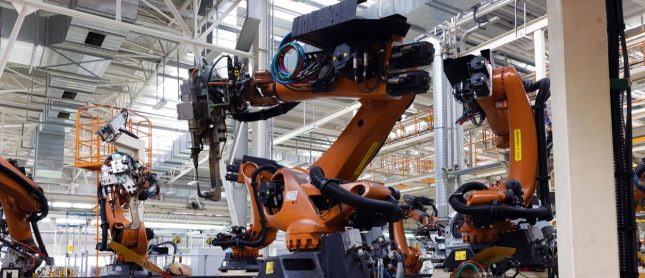
Stepper Gear Motors: Mainly used in applications requiring precise positioning control, such as robotics, home automation, telecommunication antennas, surveillance cameras, valves, airflow controllers, and projectors.
A stepper motor operates on pulsed direct current, precisely synchronised via electronic management, enabling it to divide its rotation into numerous steps. The motor’s position can be accurately monitored without necessitating closed-loop control (feedback).
Stepper gear motors attain maximum torque at low speeds, rendering them particularly suitable for high-precision applications demanding robust holding torque, such as robotics, 3D printers, and any devices where precise positioning is critical.
We appreciate there is a lot to consider when choosing between a miniature DC gearmotor and a stepper gear motor; however, that is where Rotalink comes in. We can help you find the perfect motor for your specific application. Simply get in touch with our team who will be able to find you a product that fits your requirements.