We use cookies to help you navigate efficiently and perform certain functions. You will find detailed information about all cookies under each consent category below.
The cookies that are categorised as "Necessary" are stored on your browser as they are essential for enabling the basic functionalities of the site....
For more information on how Google's third-party cookies operate and handle your data, see: Google Privacy Policy
Necessary cookies are required to enable the basic features of this site, such as providing secure log-in or adjusting your consent preferences. These cookies do not store any personally identifiable data.
Functional cookies help perform certain functionalities like sharing the content of the website on social media platforms, collecting feedback, and other third-party features.
Analytical cookies are used to understand how visitors interact with the website. These cookies help provide information on metrics such as the number of visitors, bounce rate, traffic source, etc.
Performance cookies are used to understand and analyse the key performance indexes of the website which helps in delivering a better user experience for the visitors.
Advertisement cookies are used to provide visitors with customised advertisements based on the pages you visited previously and to analyse the effectiveness of the ad campaigns.
Other uncategorised cookies are those that are being analysed and have not been classified into a category as yet.
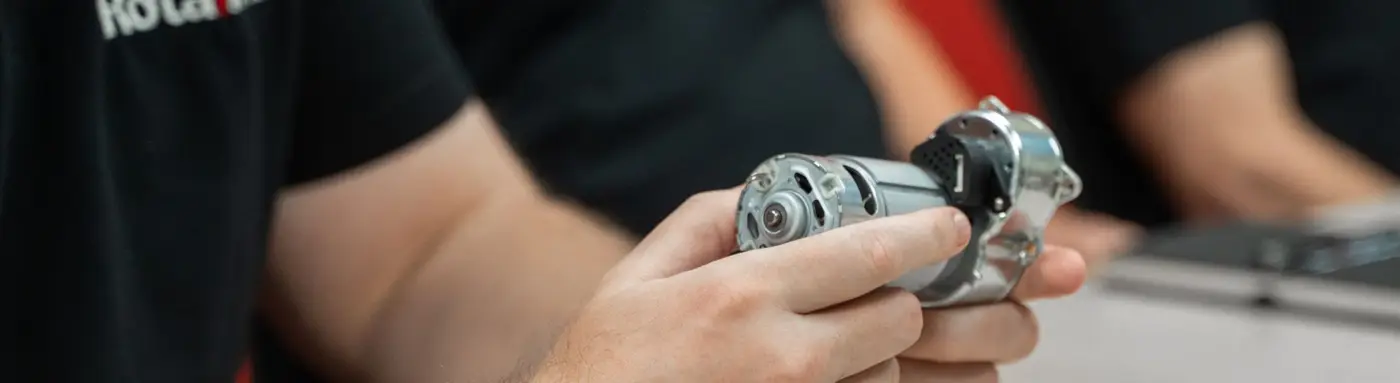
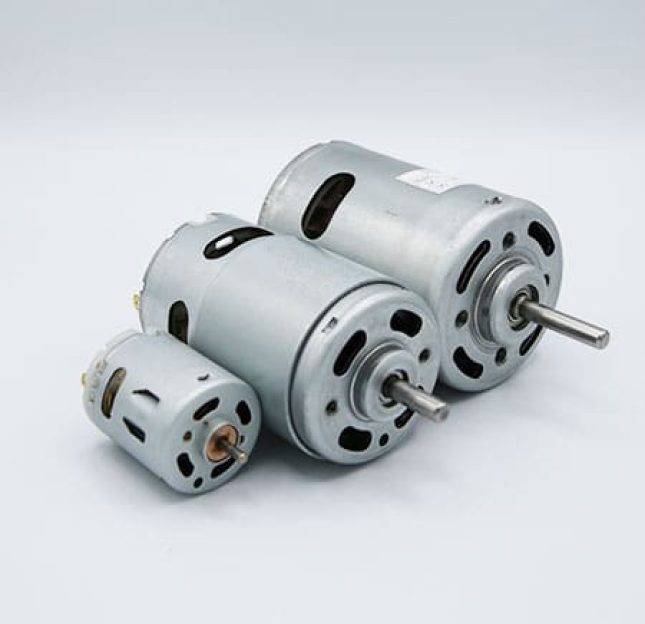
Reliable power in a compact design: Rotalink’s miniature brushed motors offer simplicity and efficiency for diverse applications.
A miniature brushed motor is a type of electric motor that uses brushes for the transmission of electrical current to the motor’s rotating armature. Here’s a breakdown of its key components and how it operates:
Armature: The rotating part of the motor that is connected to the output shaft. As electrical current flows through the armature, it generates a magnetic field.
Stator: The stationary part of the motor that surrounds the armature and contains the magnets or magnetic coils. The interaction between the magnetic field of the armature and the stator causes the armature to rotate.
Brushes: Small conductive components (often made of carbon) that maintain electrical contact with the armature as it rotates. Brushes transfer electrical current from a fixed power source to the rotating armature.
Commutator: A rotary switch mounted on the armature that reverses the direction of the current flow at specific points in the rotation. This reversal of current ensures a continuous rotation of the armature.
Electric Current Flow: When an electric current is applied to the brushes, they maintain contact with the commutator, allowing the current to flow into the armature.
Magnetic Field Generation: The current flowing through the armature generates a magnetic field. The interaction between this magnetic field and the stator’s magnetic field creates a torque, causing the armature to rotate.
Commutator Action: As the armature rotates, the commutator ensures that the direction of the current flowing through the armature is periodically reversed. This reversal ensures a continuous rotation of the armature.
Simplicity: Brushed motors are relatively simple in design, making them cost-effective and easy to manufacture.
Widespread Use: Despite advancements in brushless motor technology, brushed motors are still widely used in various applications.
Brush Wear: The brushes in a brushed motor can wear out over time, requiring periodic maintenance or replacement.
Limited Lifespan: Due to brush wear, brushed motors generally have a limited lifespan compared to brushless motors.
At Rotalink, we understand that different applications may call for different motor technologies. Our brushed and brushless miniature motors reflect our commitment to providing a comprehensive selection, allowing you to make choices based on your specific performance, maintenance, and cost considerations.